Thermal insulation
Thick, porous technical-fibre structures where density and thickness influence the insulation route.
 KALE TEXNIQUE PVT. LTD.Textile Machinery · Structural Preforms
2.5D needle-felted preforms
Needle penetration carries fibre segments between layers, creating thickness linkage for dense felts, shaped structures, insulation architectures and ablative-preform development.
Why 2.5D
The description is deliberately precise. Needling entangles fibres through thickness, but the architecture differs from a 3D woven system with deliberately placed continuous Z reinforcement.
Programme directions
Thick, porous technical-fibre structures where density and thickness influence the insulation route.
Dry fibre architectures intended for later impregnation, processing and thermal/erosion evaluation.
Needled carbon-fibre structures that may enter a multi-stage densification and heat-treatment programme.
Cones, blocks and non-flat forms developed around the intended geometry.
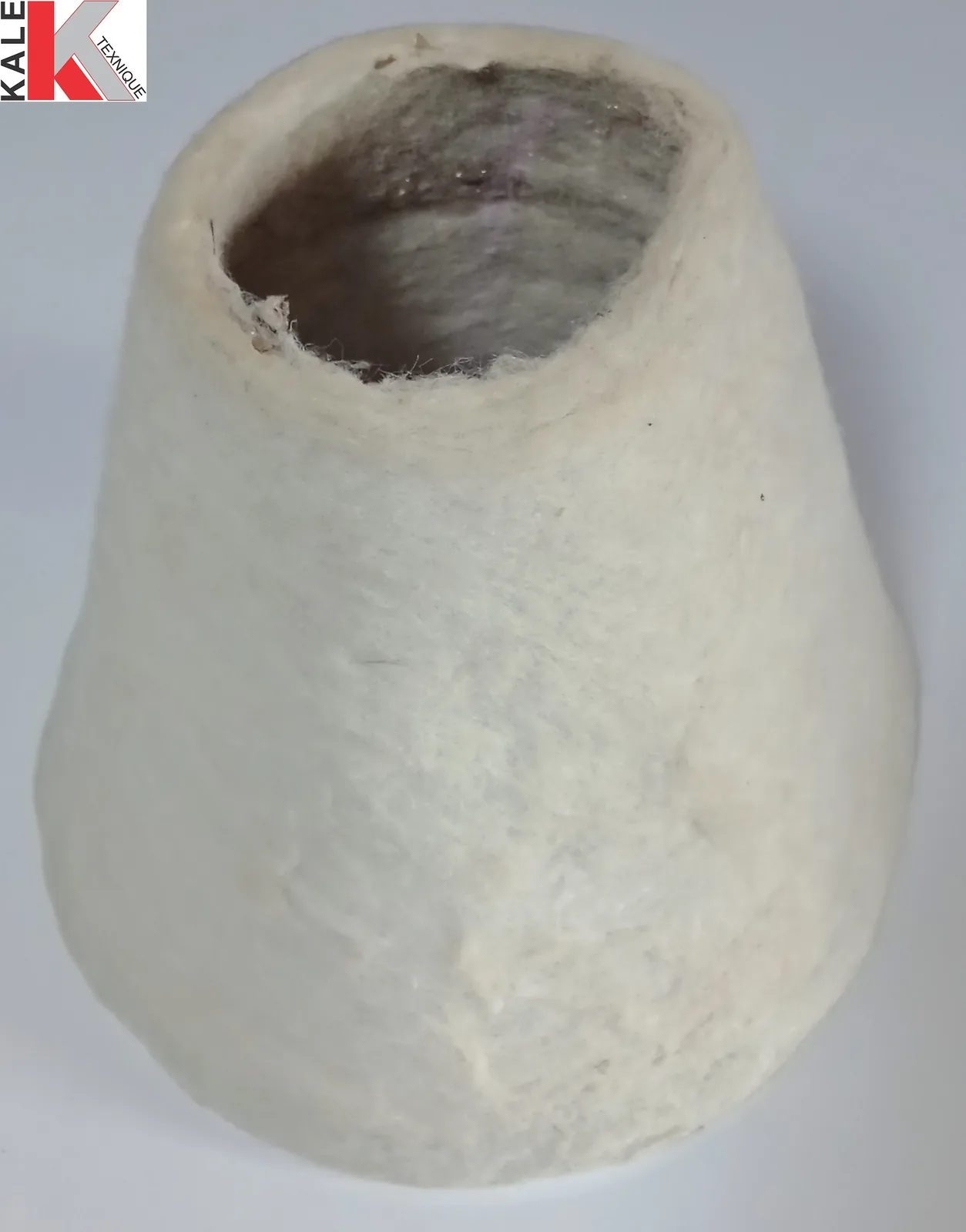
A non-flat technical-fibre structure demonstrating shaped needling and thickness consolidation.
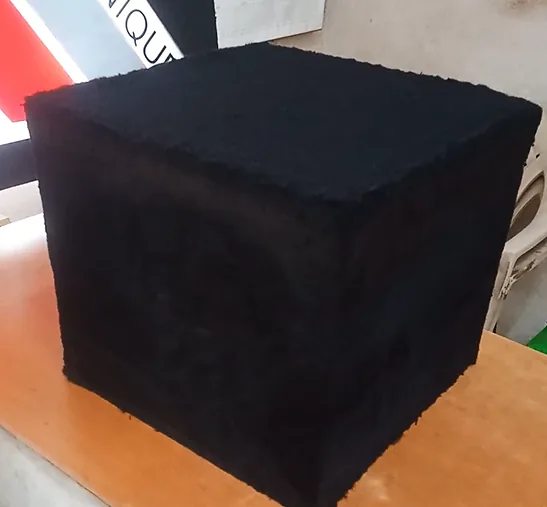
High-thickness carbon-fibre form for density, insulation and precursor-material studies.
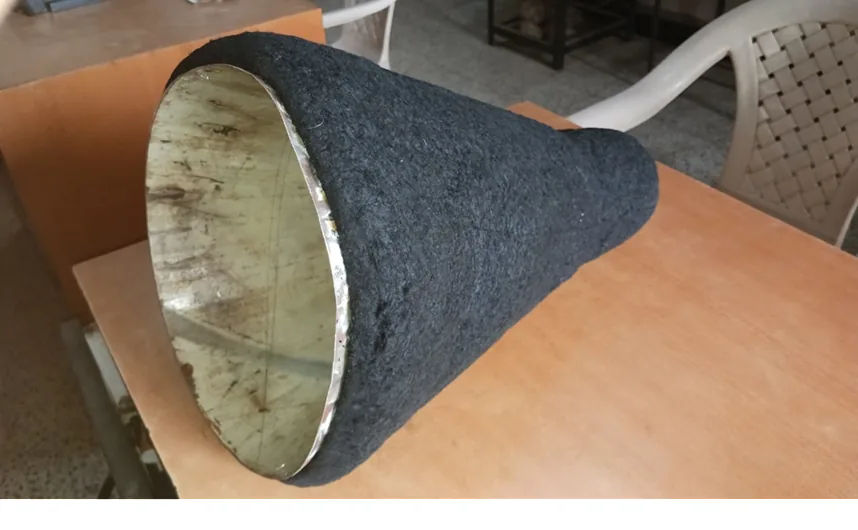
Geometry-led felting evidence showing that the process is not limited to flat webs.
Ablative performance belongs to the final fibre–matrix or carbon–carbon system and must be demonstrated under the applicable heat-flux, pressure, gas chemistry, erosion, duration and geometry conditions.